
 <\/div><\/div>
Storage Giant Against the Wind: How Micron's Earnings Reveal a Structural Shift in AI Infrastructure?<\/h1>\n
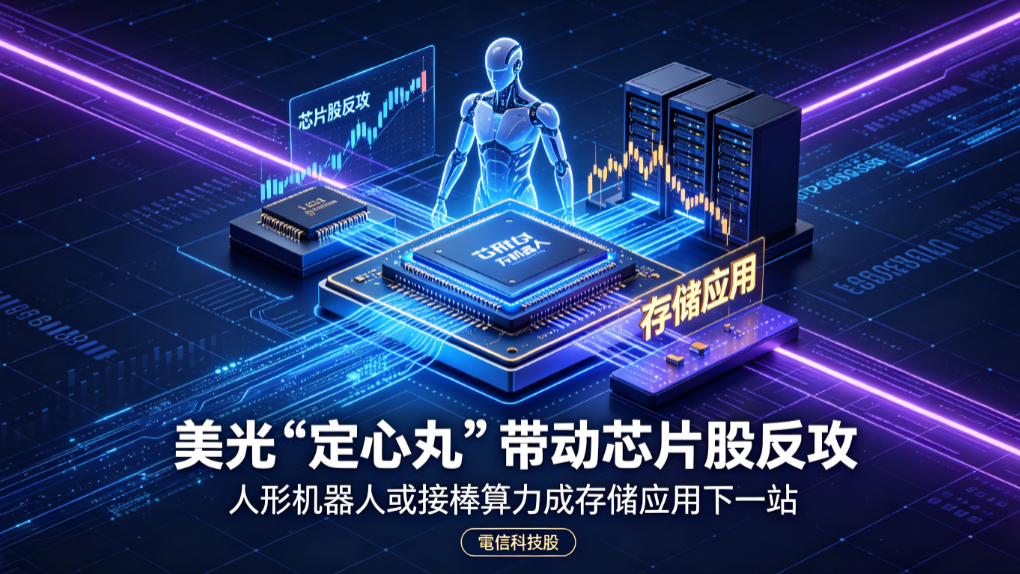
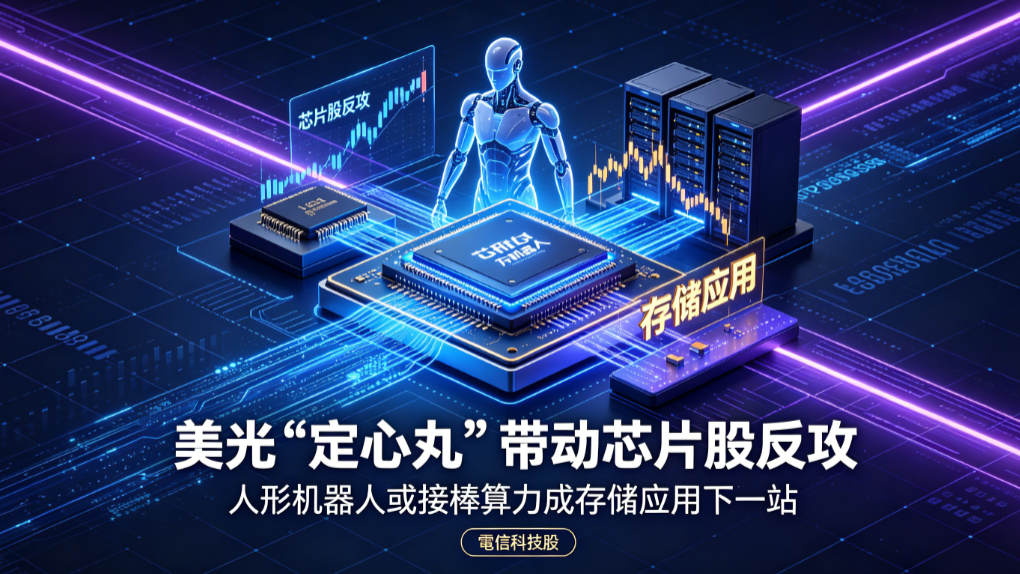
Keywords: Micron Technology, AI Memory, HBM4, Strategic Long-Term Contracts, Supply Chain Bottlenecks<\/strong><\/p>\n At a critical moment when global tech stocks face severe selling pressure and artificial intelligence (AI) valuations trigger widespread market doubts, Micron Technology, the world's third-largest storage chip maker, reversed market sentiment with its better-than-expected Q3 fiscal results, driving a full rebound in global chip stocks. This earnings report is not just a set of impressive financial figures; it also profoundly reveals that the storage supply chain is undergoing an unprecedented structural transformation during the AI infrastructure buildout cycle. From 16 long-term strategic agreements to a guaranteed revenue floor of up to $100 billion, and to the new demand cycle about to be opened by humanoid robots, Micron's performance offers investors an opportunity to re-examine the essence of the AI industry.<\/p>\n Micron Technology released its fiscal Q3 2026 (March to May) earnings after the market close on June 24, showing total revenue of $41.46 billion, up 74% sequentially and a staggering 346% year-over-year. GAAP net profit was $28.24 billion, with a comprehensive gross margin of 84.9%. This result far exceeded the consensus estimate of approximately $35.8 billion from multiple Wall Street investment banks, by about 16%, becoming a key catalyst for market sentiment repair.<\/p>\n Before the earnings release, concerns about slowing AI demand had caused the Philadelphia Semiconductor Index to plunge about 7.9% in a single day, and Micron's own stock fell about 18% cumulatively over two trading days. However, Micron's earnings and next-quarter guidance significantly alleviated this pessimism. Data showed that Micron's core data center business revenue surged from $1.53 billion in the same period last year to $11.524 billion, a year-over-year increase of over 653%; cloud storage memory revenue reached $13.769 billion, up 306% year-over-year. Driven by this, Micron's after-hours stock price once soared over 16%, driving chip stocks such as Qualcomm and Western Digital to rise simultaneously. The next day, A-share storage-related concept stocks and South Korea's KOSPI index also rallied broadly, with the Korean index triggering a circuit breaker as a result.<\/p>\n Compared to the earnings data itself, the long-term agreement arrangements disclosed by Micron during the conference call demonstrate its far-sighted strategic layout. Management disclosed that Micron has signed 16 binding "take-or-pay" strategic customer agreements covering customers in data center, consumer, and automotive markets, with contract terms extending from 2026 to the end of 2030. These agreements clearly specify purchase quantities and set price floors and ceilings, covering about 20% of Micron's DRAM shipments and 33% of NAND shipments. Notably, even at the minimum price, the guaranteed revenue from 14 of these agreements totals approximately $100 billion.<\/p>\n Micron management emphasized that even if future market prices fall to the agreement floor, the company's gross margin will far exceed peak levels of any previous cycle, greatly alleviating concerns about declining storage prices. In addition, these long-term contracts have brought Micron substantial cash guarantees. According to the agreements, Micron expects to receive a cumulative $22 billion in cash deposits and related financial commitments, of which about $18 billion are cash deposits to be held during the contract period. In Q3 fiscal, it received over $400 million in cash deposits, and expects to receive about $10 billion more in Q4 fiscal. These funds not only strengthen the balance sheet but also provide a solid backing for future capacity expansion.<\/p>\n Meanwhile, structural constraints in the supply chain are profoundly impacting industry trends. Micron clearly pointed out multiple supply bottlenecks in its report: long construction cycles for new fabs, a global shortage of key technical workers, limitations in energy infrastructure, and extreme consumption of wafer capacity by HBM. TrendForce analyst Wang Yuqi noted that the delivery cycle for core storage equipment machines is as long as 12 months, limiting the scale of new capacity release. Micron management further predicted that due to AI-driven demand and structural supply constraints, tight conditions will persist until after 2027, and even if gradually improving by 2028, it is still unclear when memory supply will catch up with demand growth.<\/p>\n In the deepening development of AI applications, Micron is actively expanding its partnership landscape. On June 22, Micron announced a strategic cooperation agreement with AI company Anthropic, covering co-design of AI architecture for storage and memory, a data center product supply agreement, and Micron's strategic investment in Anthropic's Series H funding round. Micron has internally deployed Claude for programming and agent application scenarios. This cooperation is one of the few cases where the customer name is publicly disclosed, highlighting its significance.<\/p>\n From a product perspective, Micron's HBM4 high-bandwidth memory based on 1-beta DRAM technology has already generated over $1 billion in revenue. The average DRAM price increase in Q2 this year remains 50%-60%, with a cumulative increase estimated to reach 200%-300% by year-end. Beyond cloud computing power, humanoid robots are emerging as another growth potential worth noting. TrendForce forecasts that humanoid robot shipments in China will exceed 30,000 units in 2026, accounting for 75% to 80% of global shipments. Micron management further pointed out that the memory capacity installed in a humanoid robot will be 10 times that of an average L2+ level car, and it is estimated that in the latter half of the 2020s, the large-scale deployment of humanoid robots will open a memory demand cycle lasting decades.<\/p>\n Micron Technology's better-than-expected earnings are not just a commercial success for a single company; they also reveal that AI infrastructure is at a critical moment transitioning from component shortages to structural reconstruction. The 16 strategic long-term contracts lock in a hundred-billion-dollar revenue base, successfully converting price risk into long-term profit protection; while persistent supply chain bottlenecks force the entire industry chain to accelerate adjustments. From high-end HBM memory to future humanoid robot applications, Micron's development path is clear: within limited capacity, prioritize serving high-end and strategic partners, and expand its moat through capital cooperation and technology integration. For the entire semiconductor industry, the supply-demand imbalance in the storage sector will continue to dominate market dynamics in the coming years, and Micron has clearly secured a key position on this track.<\/p> Introduction<\/h2>\n
I. Earnings Beat and Market Confidence Restoration<\/h2>\n
II. Strategic Long-Term Contracts Locked In and Supply Chain Restructuring<\/h2>\n
III. Deep AI Layout and Humanoid Robots as New Growth Poles<\/h2>\n
Conclusion<\/h2>\n