
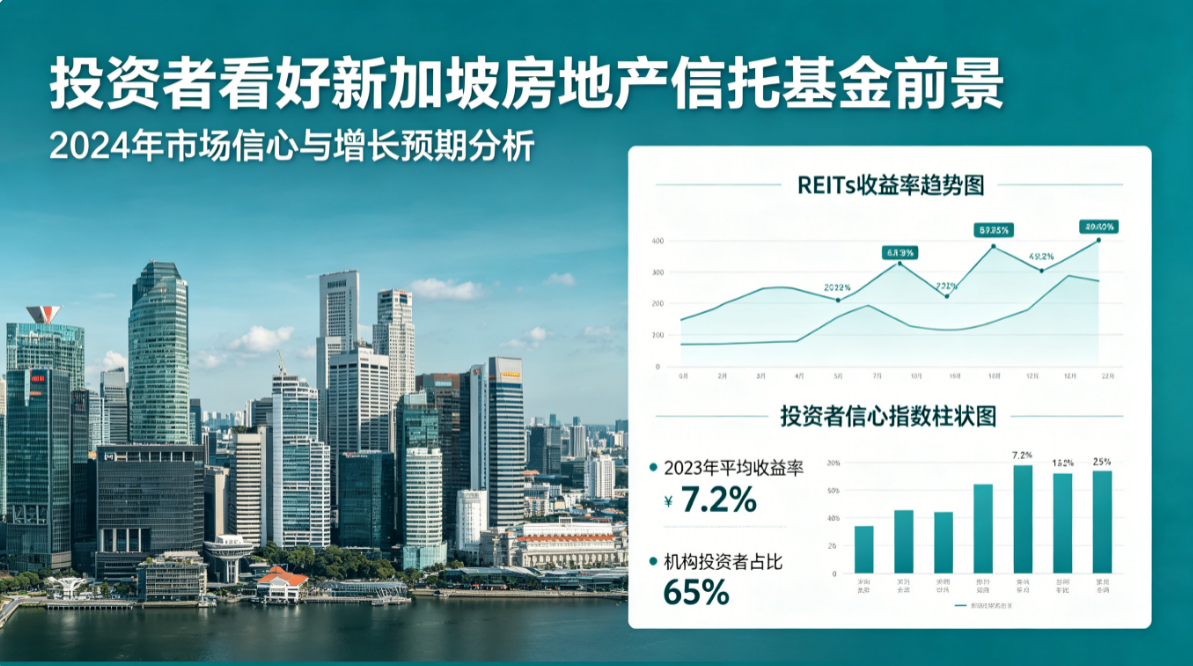
Oil Prices Fall, Funds Shift to Safe Haven: Singapore REITs Regain Market Favor
The recent trend in international oil prices feels like a thrilling suspense film—first surging amid the shadow of Middle East conflict, alarming investors, then quickly deflating as markets anticipate a potential easing of geopolitical tensions, giving back earlier gains. This roller-coaster ride has left many sweating, but it has also triggered a massive capital shift.
From "Chasing Trends" to "Seeking Refuge"
To be honest, the volatility in international oil prices over the past few months has been quite a trial for the markets. Whenever the Israel-Hamas conflict escalated or news came from Iran, oil prices shot up like a shot of adrenaline. Investors glued to red and green screens silently prayed for no more surprises. But the stock market never follows the rules. Just as everyone expected the Middle East situation to heat up further, news of progress in ceasefire talks sent oil prices tumbling.
This dramatic turn might be a disaster for short-term traders who love to chase trends, but for investors focused on long-term stable returns, it's an opportunity to reassess asset allocation. After all, when oil prices stay high, inflation pressure looms like a ghost, and central banks are forced to maintain high interest rates. Once oil prices fall, inflation expectations cool, and the hope of rate cuts re-emerges.
Market analysts are buzzing with a common conclusion: as energy costs decline, financing costs are likely to follow, which is a welcome relief for assets with higher leverage and sensitivity to interest rates. Amid this capital shift, Singapore Real Estate Investment Trusts (S-REITs) have emerged as one of the brightest stars.
S-REITs: A Pill of Reassurance for Conservative Investors
Many retail investors are familiar with S-REITs. Their biggest feature is stability—steady yields, high payout ratios, and relatively low price volatility. During the global rate hikes of recent years, REITs were sidelined as rising rates increased their financing costs and compressed payout space. But now the situation is quietly changing.
Falling oil prices mean easing inflation pressure, allowing the Fed and other major central banks to pivot toward looser policy sooner. As rate cut expectations rise, REIT valuations get support, since investors can discount these stable cash flow assets at lower rates. In other words, the "smart money" that quietly bought S-REITs during the downturn is now reaping the harvest.
Moreover, Singapore's REIT market itself is highly attractive. Their holdings span commercial offices, retail malls, industrial logistics, data centers, healthcare, and more, providing diversification that effectively spreads risk. Importantly, as an Asian financial hub, Singapore has a rigorous regulatory environment and transparent disclosure, giving comfort to foreign institutions and individual investors.
Recent statistics show S-REITs offer average dividend yields of 5% to 6%, with some even higher. In a global low-rate environment not yet fully restored, such returns are enticing. For investors seeking passive income, these steady quarterly dividends are more refreshing than coffee.
Aviation and Real Estate: Two Hidden Potential Arrows
Beyond S-REITs, the oil price decline has also brightened two other sectors: aviation and property developers. The logic is simple but often overlooked by investors.
First, aviation. You may recall that during the pandemic, when international oil prices crashed, airlines—despite minimal passenger loads—benefited from sharply lower fuel costs, helping them weather the toughest period. Now the situation is different, but the principle remains: fuel is one of the largest operating costs for airlines, often exceeding 30%. For every 10% drop in oil prices, airline profits can rise by several percentage points. Moreover, airfares remain relatively high and travel demand is still strong. If oil prices stay low, aviation stocks' earnings outlook is definitely promising.
Next, property developers. You might ask, "What does oil have to do with building houses?" Actually, a lot. Falling oil prices usually coincide with easing overall price pressures, leading to lower construction material costs. The production and transportation of cement, steel bars, and asphalt all rely on oil. When oil falls, developers' cost pressures ease. Plus, if interest rate conditions become looser, homebuyers' loan costs drop, stimulating demand. All this expands developers' profit margins.
Of course, this doesn't mean aviation and property stocks will surge immediately. Market reactions take time, and investor confidence rebuilding isn't overnight. But if you have patience and take a long-term view, these two sectors could become hidden champions in your portfolio.
Don't Rush to Exit, the Wind Has Just Turned
Finally, a small perspective: Markets always swing between extreme optimism and extreme pessimism. Truly smart investors are greedy when others are fearful and fearful when others are greedy. Now that oil prices have fallen, many may hesitate to jump in. But think: although Middle East uncertainty remains, the market has largely priced in this risk. Once the worst is digested, what remains is often a rebound opportunity.
Of course, risks persist. If another flare-up in the Middle East occurs, oil prices could spike again, pressuring these defensive assets. So I suggest investors don't put all eggs in one basket, but adopt a "core + satellite" strategy: allocate part of funds to stable income assets like S-REITs, and flexibly allocate to cyclical sectors like aviation and real estate. This way, you can enjoy potential growth while reducing overall volatility.
In short, the oil price decline is like a fresh breeze, blowing away the inflation haze over the market. S-REITs, aviation stocks, and property developers—once sidelined by high rates—now have their stage again. How long this show lasts? Let's wait and see.
After all, on the investment path, opportunities are never lacking; what's lacking is the eye to spot them and the determination to endure solitude.