Zhipu AI Market Cap Surpasses Trillion: GLM-5.2 Ignites Market, US-China AI Race Enters New Phase
Keywords: Zhipu AI, GLM-5.2, Elon Musk, Tang Jie, Large Model, Valuation, AGI
I. Introduction: Technology and Capital Resonance Behind Trillion Market Cap
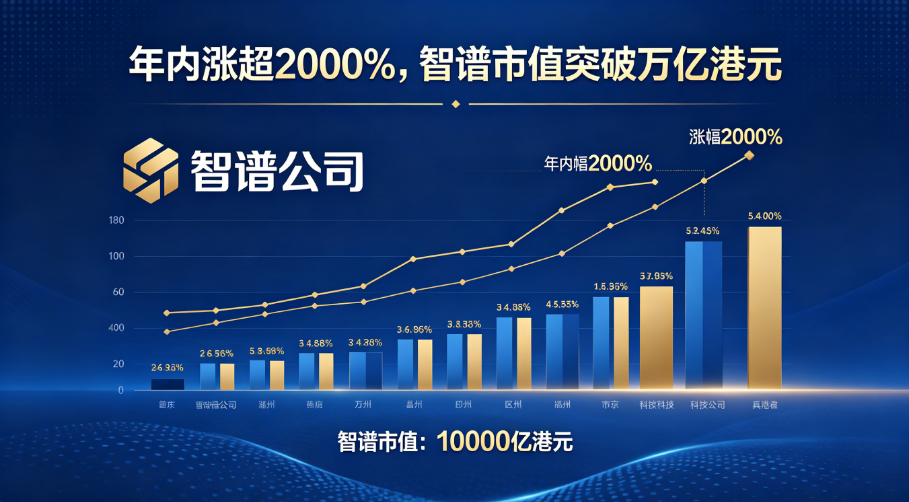
On June 22, 2025, Zhipu AI, hailed as the "world's first large model stock," reached a historic moment—intraday market cap surpassed HK$1 trillion, with YTD gains exceeding 2000%. As of press time, its stock price was HK$2,498/share, up over 19% in a single day. This market cap leap not only reflects the capital market's frenzy for the AI track but also mirrors the strong resonance between large model technological iteration and commercialization expectations.
Zhipu AI's rise is no accident. Just a week earlier, the company released its new flagship model GLM-5.2, whose outstanding performance quickly ignited industry discussions and even sparked a "trans-Pacific debate" between Zhipu founder Tang Jie and Tesla CEO Elon Musk. Behind this debate lies the contest between China and the US in cutting-edge AI fields, as well as a microcosm of the market's restructuring of large model valuation logic.
II. Technology Breakthrough of GLM-5.2: From Instant Q&A to Long-Range Tasks
Unlike previous models focused on instant Q&A capabilities, the core selling point of GLM-5.2 is "long-range tasks"—enabling AI to operate continuously for hours like a human, autonomously completing a complete large-scale engineering project. This shift in technical approach marks the evolution of large models from "tools" to "agents."
On Code Arena, a front-end development evaluation system with millions of global users participating in blind testing, GLM-5.2 ranks first among globally available models. This achievement not only validates its leadership in complex scenarios such as code generation and multi-step reasoning but also indicates that Zhipu has achieved competitiveness in "practical deployment" dimensions compared to top international models. From a technical architecture standpoint, GLM-5.2 adopts a novel attention mechanism and memory compression algorithm, maintaining coherent logical reasoning in ultra-long contexts—a key enabler for long-range tasks.
III. The Debate Between Musk and Tang Jie: Dispute Over the Timeline of US-China AI Gap
On June 18, a netizen asked on social media: "When is China's large model expected to reach Anthropic's Fable level? Zhipu GLM-5.2 has undoubtedly narrowed the gap." Musk quickly replied: "Probably by Q1 2027." This seemingly conservative prediction quickly drew a response from Tang Jie: "It won't take that long."
Musk further elaborated: "Looking solely at benchmark scores, maybe so; but judging by practical deployment value, even catching up by Q1 next year is already impressive. Anthropic is right—they are fully focused on honing intelligent capabilities with real practical value—capabilities that don't show up in benchmarks but can genuinely translate into revenue."
Tang Jie responded: "Focus is all we need, especially on what the essence of intelligence truly is." This dialogue reveals a fundamental divergence in their criteria for evaluating AI: Musk emphasizes commercialization and practical utility, while Tang Jie leans toward exploration and breakthroughs in the essence of technology.
Industry insiders have mixed interpretations. Some AI experts believe Musk's prediction is relatively conservative, and the time gap between US and Chinese model levels may be shorter than seven months. Google DeepMind CEO Demis Hassabis has previously stated publicly that China's AI models may be "only a few months behind" overseas in capability. This optimism is preliminarily supported by GLM-5.2's Code Arena performance.
IV. Capital Market Frenzy and Valuation Controversy
Zhipu AI's stock price has soared since its IPO, becoming one of the strongest new stocks in Hong Kong stocks this year. In a research report, JPMorgan pointed out that as monetization paths converge toward API, coding, agents, and enterprise workflows, the leadership of model capabilities becomes critical, and pricing power will depend more on capability itself than on product coverage or usage scale. This view is fully reflected in Zhipu's valuation logic—its rapid market cap increase is precisely the market's pricing of its technological leadership.
However, with the arrival of a trillion-dollar market cap, debates about valuation bubbles are heating up. Some brokerage analysts believe that when evaluating large model companies, one should break away from traditional frameworks; the high valuation reflects a premium for high growth and technological prospects. But at the same time, it should be noted that the current valuation includes some temporary premiums, mainly due to factors such as scarcity of listed stocks and small tradable float. In the future, as more companies go public and existing stocks unlock, the sector may face short-term valuation pressure. In the long run, whether its value can be sustained depends ultimately on whether the company can translate its technological leadership into commercialization capabilities.
V. Zhipu's AGI Exploration Path: Scaling, Technological Innovation, and Multimodal Integration
In terms of technical direction, Tang Jie has previously stated that Zhipu will continue to advance AGI exploration in 2026 from three aspects:
First, continuing "Scaling." In known domains, continuously increase data and explore limits; in unknown domains, explore new paradigms. This strategy follows the classic deep learning path of "larger models, more data," but Zhipu emphasizes simultaneously seeking breakthroughs in unknown areas.
Second, technological innovation. Use novel model architecture innovations to solve ultra-long context, more efficient knowledge compression, and achieve knowledge memory and continuous learning. GLM-5.2's long-range task capability is a preliminary result of this direction, but more fundamental leaps at the architectural level are needed in the future.
Third, multimodal sensory integration. Tang Jie believes that when AI can uniformly understand and process multimodal information such as vision, speech, and touch like humans, forming coordinated perception and decision-making, it can truly execute long tasks in human work environments. Only then can AI achieve embodiment and enter the physical world. This direction aligns with the industry's exploration of "world models" and provides a clear blueprint for Zhipu's long-term layout.
VI. Conclusion: Balancing Act Between Tech Leadership and Commercialization
Zhipu AI's trillion-dollar market cap is both a recognition of its technical strength and a vote of confidence in the future of the AI track. Yet behind the capital frenzy, the real challenges are just beginning. While GLM-5.2's success is exciting, the path from benchmarks to revenue is still fraught with hurdles such as productization, ecosystem building, and customer acquisition.
The debate between Musk and Tang Jie reflects a clash of two business philosophies: one emphasizing pragmatic implementation, the other fixated on technological essence. For Zhipu, whether its long-term value can be sustained hinges on finding a balance between the two—maintaining technological leadership while rapidly converting that lead into a sustainable business model. As Tang Jie said, "Focus is all we need," and the direction of that focus may be the answer that investors and the industry most look forward to on the long journey toward AGI.