Semiconductors: The Key Force Driving the Digital Age
Introduction
In the evolution of modern technology, semiconductors undoubtedly play the most central role. From smartphones and cloud computing to artificial intelligence and electric vehicles, almost all cutting-edge technologies rely on semiconductor components. Semiconductors are not only the "brain" of electronic products but also the cornerstone driving global digital transformation, energy efficiency improvement, and communication revolution. However, the recent turbulence in the global semiconductor supply chain—from capacity shortages to geopolitical interventions—has highlighted the strategic importance of this industry. This article will delve into the basic principles of semiconductors, the structure of the industry chain, market status, and future trends.
Physical Basis and Application Scope of Semiconductors
A semiconductor is a material with conductivity between that of a conductor and an insulator, with the most common raw material being silicon (Si). Through doping and band engineering, semiconductors can control the conduction and cutoff of current under specific conditions, enabling functions such as logic operations, signal amplification, and energy conversion. From diodes and transistors to integrated circuits (ICs), the miniaturization and integration of semiconductor components continue to improve, following the evolution of Moore's Law and driving exponential growth in electronic product performance.
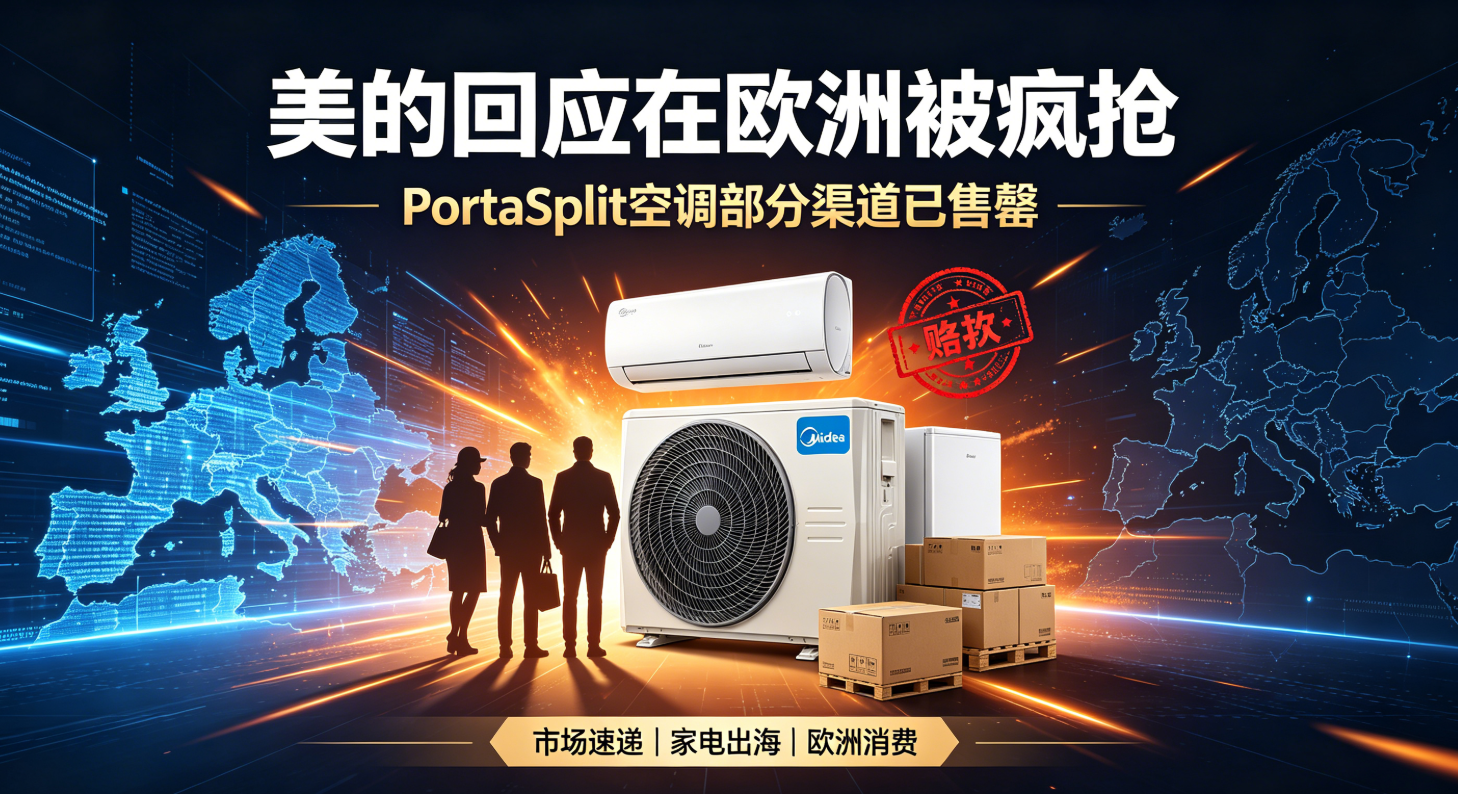
Semiconductors have a wide range of applications, including consumer electronics, communication equipment, automotive electronics, industrial control, medical instruments, and defense aerospace. Particularly under the wave of the Internet of Things (IoT) and smart manufacturing, embedded semiconductor chips have become the core of device intelligence. As shown in the image below, even a seemingly traditional split air conditioner relies on advanced semiconductor technology for its internal control chips, power modules, and sensors.

The image above shows the sell-out of Midea split air conditioners in the European market, reflecting not only the popularity of the product itself but also the ripple effect of global semiconductor supply instability on the home appliance industry. While news of automotive chip shortages causing production cuts dominates headlines, white goods like home air conditioners are equally constrained by supply bottlenecks of key components such as microcontrollers and power management ICs. This demonstrates that semiconductors have penetrated every corner of daily life, and any supply chain volatility quickly transmits to end products.
Structure and Challenges of the Global Semiconductor Industry Chain
The semiconductor industry chain can be divided into four major segments: design, manufacturing, packaging and testing, and equipment and materials. The design segment is dominated by fabless companies such as Qualcomm, Broadcom, and MediaTek; manufacturing is highly concentrated in foundries and integrated device manufacturers (IDMs) like TSMC, Samsung, and Intel; packaging and testing, as well as equipment and materials, are led by companies like ASE, Applied Materials, and Tokyo Electron. Taiwan and South Korea hold significant positions in global semiconductor manufacturing, while the United States, Japan, and Europe maintain competitive advantages in design, equipment, and materials.
However, this highly specialized and geographically concentrated structure also brings vulnerability. In recent years, US-China trade frictions, the COVID-19 pandemic, and extreme climate events have repeatedly disrupted the semiconductor supply chain. Governments around the world have proposed localization strategies, such as the US CHIPS and Science Act, the European Chips Act, and semiconductor investment subsidy plans in Japan and India. These measures aim to reduce dependence on single supply sources, but in the short term, they may raise chip costs and exacerbate waste from redundant capacity deployment.
Future Trends: Advanced Processes, Third-Generation Semiconductors, and Heterogeneous Integration
Looking ahead, the development direction of the semiconductor industry will focus on the following key areas:
1. Continued Evolution of Advanced Processes
As nanometer-scale processes approach physical limits, TSMC and Samsung have invested in mass production research for 3nm and even 2nm nodes. Innovations such as extreme ultraviolet (EUV) lithography and gate-all-around (GAA) transistor structures will continue to improve chip performance and power consumption.
2. Rise of Third-Generation Semiconductors
Wide-bandgap semiconductor materials like silicon carbide (SiC) and gallium nitride (GaN), due to their high voltage resistance, high frequency, and high efficiency, are replacing traditional silicon-based components in areas such as electric vehicle charging stations, 5G base stations, and solar inverters. These third-generation semiconductors will become key drivers of future energy transition.
3. Heterogeneous Integration and Chiplet Architectures
To overcome the yield and cost limitations of monolithic integration, the industry is shifting toward integrating chiplets with different processes and functions using advanced packaging technologies (e.g., 3D IC, silicon interposers). This heterogeneous integration model not only enhances design flexibility but also helps accelerate time-to-market.
Conclusion
Semiconductors are not only the engine of the Fourth Industrial Revolution but also the core pillar of national economic security and technological sovereignty. From the sell-out phenomenon of a home appliance to the global chip shortage and the race among countries to build local supply chains, the dynamics of the semiconductor industry are constantly reshaping the world landscape. For enterprises, securing stable semiconductor supply capabilities and forward-looking technology deployment will be decisive factors for competitiveness; for nations, cultivating semiconductor talent, strengthening independent R&D, and enhancing international cooperation are necessary investments to safeguard long-term development interests. In the foreseeable future, semiconductors will continue to invisibly construct the smart life we see.