
 Why Invest in Chips
芯片投資新邏輯:AI邊緣運算引爆新加坡半導體產業鏈重構
2026年7月,AI邊緣運算需求爆發,推動新加坡半導體產業鏈從傳統製造轉向端側晶片設計與封裝。本文深度剖析為何投芯片不再只看先進製程,而是聚焦邊緣AI、感測器融合與異質整合,為投資者揭示新加坡藍籌股的新增長引擎。
 Why Invest in Chips
2026年7月,AI邊緣運算需求爆發,推動新加坡半導體產業鏈從傳統製造轉向端側晶片設計與封裝。本文深度剖析為何投芯片不再只看先進製程,而是聚焦邊緣AI、感測器融合與異質整合,為投資者揭示新加坡藍籌股的新增長引擎。
 Why Invest in Chips
In July 2026, global semiconductor demand surged due to AI adoption. Singapore, with robust supply chain and policy support, became a chip investment hotspot. This article analyzes new catalysts: data center expansion, edge AI chip demand, and Singapore's geopolitical neutrality, plus blue-chip investment strategies.
 Why Invest in Chips
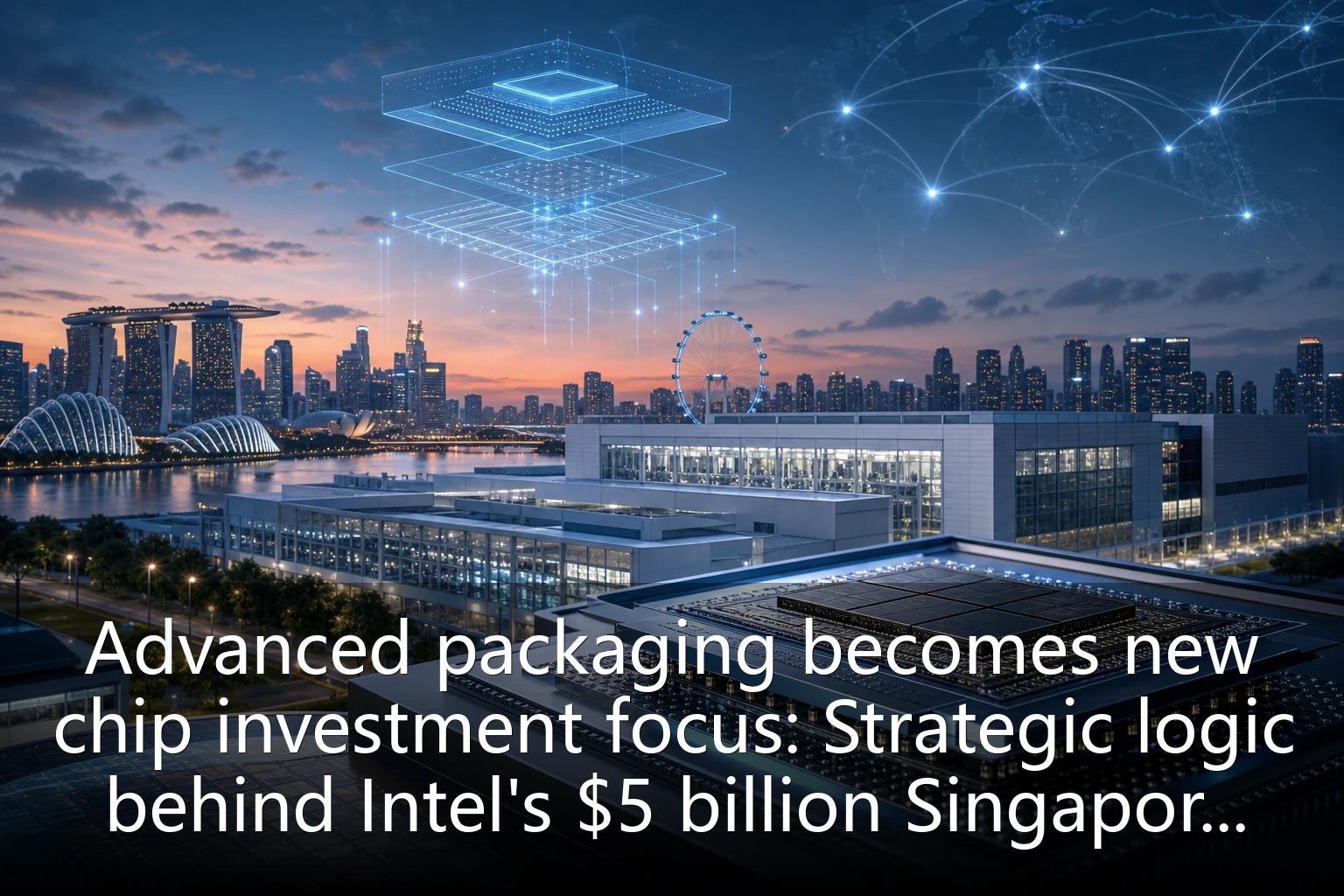
Intel announced a $5 billion investment to build an advanced packaging plant in Singapore, focusing on AI chip packaging, expected to start production in 2028. This move highlights the key role of advanced packaging as Moore's Law slows, opening a new track for chip investment. This article analyzes why advanced packaging has become the rising star of semiconductor investment from perspectives of technological breakthroughs, supply chain restructuring, market demand, and policy dividends.
 Why Invest in Chips
Amid surging AI, 5G, and IoT demand, the global chip industry enters a new growth cycle. Singapore, a semiconductor hub in Asia, has launched massive investment plans attracting TSMC and Intel to expand. This article explains why now is a key time for chip investment, providing a decision framework from supply-demand, tech breakthroughs, policy support, and valuation perspectives.
 Why Invest in Chips
At the IEEE conference, Huawei officially unveiled the Tau (τ) Law, replacing 'geometric miniaturization' with 'time miniaturization' as a new principle for semiconductor evolution, offering a third path for the global semiconductor industry and marking China's shift from follower to leader.
 Why Invest in Chips
Explores structural changes in the global semiconductor industry, from tech co-opetition, geopolitics to macro factors like US rate hikes, analyzing deep chip ecosystem restructuring and strategic significance of advanced processes and self-sufficiency.
 Why Invest in Chips
Explore the physics, industry chain, market status, and future trends of semiconductors. They are the core of smartphones, cloud computing, AI, and EVs, driving global digital transformation and energy efficiency. Learn how semiconductors become the key force driving the digital age.

